
Fentrica vs Spreadsheets, Emails & Manual Processes
Most building operators don't have one tool. They have a patchwork: Excel for tracking, email for tenant requests, phone calls for vendors. Each piece works on its own — together, they're held together by one person's memory.

These Tools Are Great. Until They Aren't
For a single building with straightforward maintenance, spreadsheets and email genuinely work. But these are general-purpose tools being asked to run a specialised operation. As your portfolio grows, the cracks become hard to ignore.
The handover problem
It's not just that one person built the master spreadsheet — they're also the sole keeper of operational knowledge: maintenance history, how systems connect, which vendor handles what. When they leave, you don't lose a file. You lose the understanding of how the building runs.
The scattered information problem
Across 10+ buildings, everything multiplies. Spreadsheets for maintenance, another for meter reads, another for tenants. Leases in email attachments. Building and technical documentation living in someone's Google Drive or sitting on a shelf. There's no single place to see everything about a building, a tenant, or a piece of equipment — you reconstruct the picture from five sources every time someone asks.
The silent error problem
A formula mistake silently corrupts tenant records for months. An email gets buried and a request goes unanswered. A vendor SLA expires because nobody set a reminder. These aren't dramatic failures — they're quiet losses that compound. And because data lives in separate tools, nothing checks for consistency.
The blind spot problem
Manual tools record what already happened. They can't show you that the AHU in Building 3 has been trending above baseline for weeks, or that a chiller is short-cycling overnight. And they can't connect the dots — that two HVAC systems are fighting each other and wasting energy, or that a ventilation unit went offline and nobody noticed.
What Actually Changes
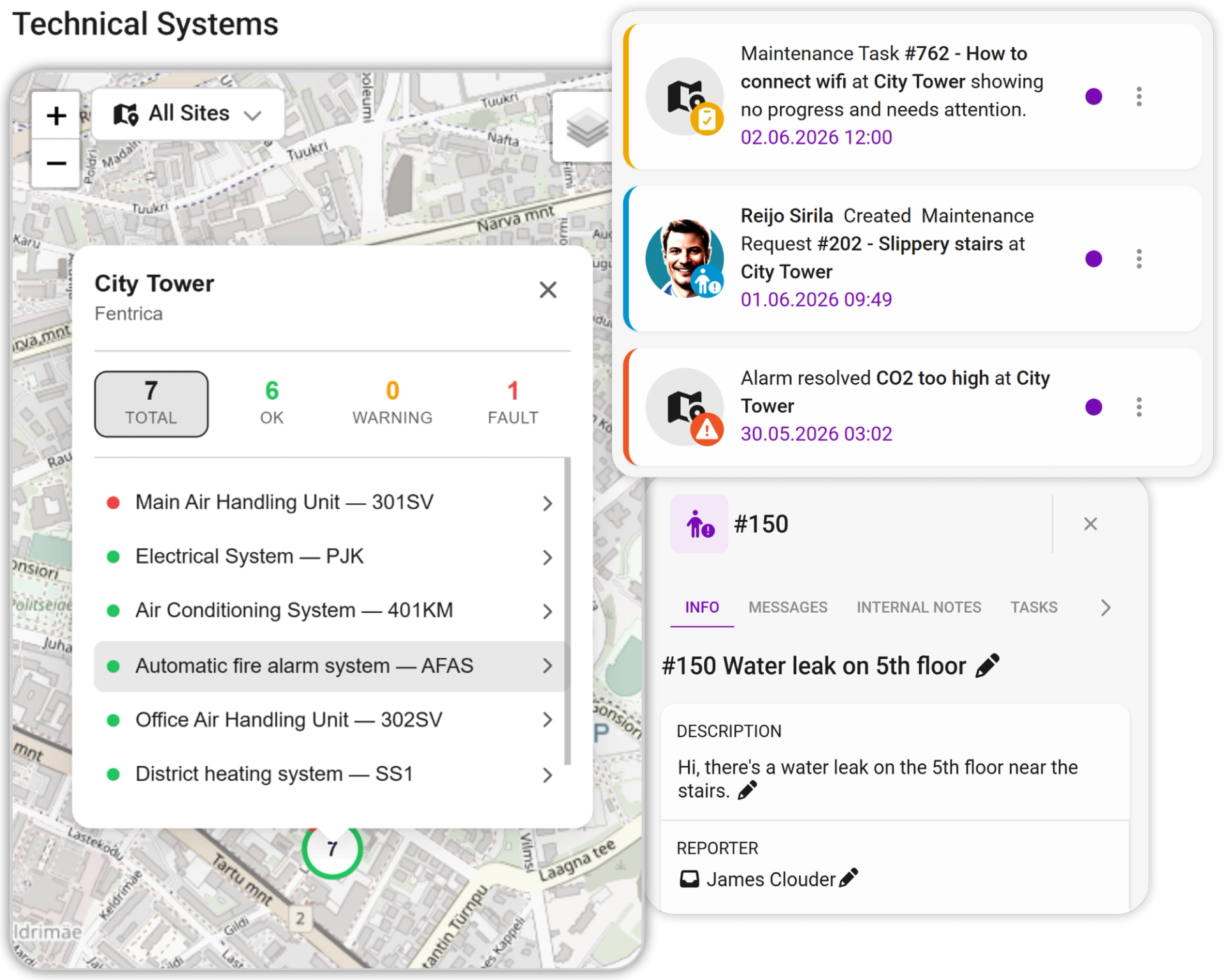
Fentrica isn't a better spreadsheet or a fancier inbox. It connects your building's technical systems to each other and to your business processes, automating the work that currently lives scattered across Excel, email, and phone calls.
Copy-pasting across 5–7 spreadsheets weekly. One formula typo corrupts months of records.
One live feed syncs maintenance, BMS, energy, and access. Zero re-keying.
No live visibility. You find out about faults when someone calls or emails.
Real-time status of HVAC, fire safety, ventilation, access. Anomaly alerts before problems escalate.
Reactive. You learn about problems from tenant emails or phone calls.
Predictive. Anomaly alerts trigger work orders automatically with parts, context, and access passes.
Arrive by email, phone, WhatsApp. Tracked in a spreadsheet that's stale by Thursday.
Self-service portal. Tenants log requests, track status, grant access. Auto-routed with SLA tracking.
Email work orders, phone follow-ups, manual SLA tracking. Access arranged by phone.
Dispatched work orders with instructions, mobile access passes, and automatic SLA tracking.
Scattered across email, shared drives, and personal folders. Finding the right file is a scavenger hunt.
All documents stored with their building, unit, or tenant. One search, one click.
No single view. Comparing buildings means opening multiple files and cross-referencing manually.
One view: maintenance debt, fault history, operational status across every building.
Manual assembly from scattered sources. Formatting takes hours. Requests get delayed.
1-click reports in under 10 minutes. Data is already connected and live.
No automated reminders. Lease renewals and safety certificates tracked manually — or not at all.
Automatic notifications before deadlines arrive. Nothing falls through the cracks.
What You Get With Fentrica
One connected platform that replaces your patchwork of tools and actively makes your operations smarter.
Connected systems
One dashboard linking BMS, CMMS, energy, and access control. No more switching between 15 tools.
Live equipment monitoring
Real-time HVAC, ventilation, fire safety, and access status. Anomaly alerts before problems escalate.
Digitalised maintenance
All maintenance data, docs, and communication in one place. Work orders trigger automatically from alarms.
Predictive maintenance
AI flags faults early. Technicians arrive once with the right parts and full context.
Access & Metering Automation
Smart meter data flows directly into your accounting software. Access passes sync across all systems from one entry, tied to contracts, invoicing, and tenancy dates.
Hardware agnostic
Connects to 1,000+ building systems through open protocols. Your existing equipment stays.
The cost of doing it manually
Spreadsheets Are Free. The Time You Spend Making Them Work Isn't
A property manager handling 5–7 commercial buildings spends roughly 8–12 hours per week on data entry, cross-referencing spreadsheets, chasing emails, and compiling reports.
With Fentrica, those same reports take one click and under 10 minutes — because the data is already connected.
Every time I open my email and see another request for a report, I read it, close it, mark it unread, and do the actual job when I'm reminded again. It's just so tedious pulling all the information together.
Which Approach is Right for You?
Both approaches have their place. Here's our honest assessment.
Manual tools
Keep Using Manual Tools
Best for operators with fewer than 10 simple units, a single admin, and basic maintenance needs.
- Fewer than 10 simple units
- One admin can hold it all in their head without frequent errors
- Basic maintenance logging only — no vendor SLAs, no tenant workflows
- No need for live visibility into building technical systems
Move to Fentrica
Best for operators managing 10+ units where maintenance, technical systems, access, and tenants need to work as one connected system.
- 10+ units across multiple buildings
- Coordinating tenants, vendors, and maintenance teams
- Need live monitoring of HVAC, fire safety, ventilation, and access
- Want predictive maintenance instead of reactive firefighting
- Spend hours on reports that should take minutes
- Need documents, portfolio overview, and deadlines in one place
How implementation works
- 01
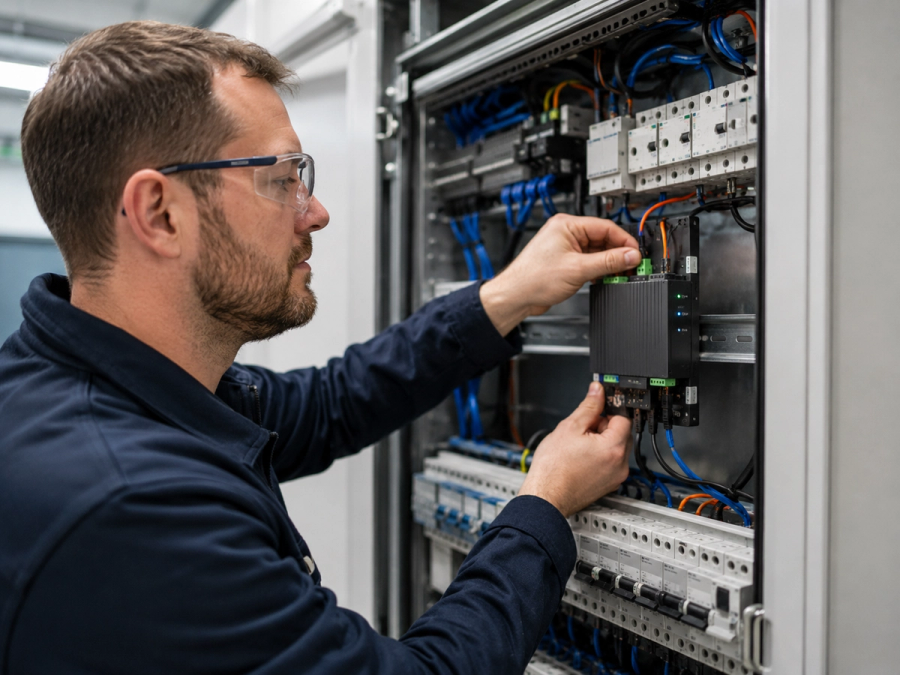
We Ship You the Fentrica Edge Device
It connects to your existing BMS, HVAC, metering, and access systems.
- 02
Our Engineers Help You Set It Up Remotely
We help you set up the platform and run as many onboarding sessions as needed until your team feels confident.
- 03
You're Live in 1–4 Weeks
Your existing equipment stays. Nothing gets ripped out.
Ready to Replace Your Patchwork?
30-minute call. No commitment. We'll show you Fentrica with your specific building setup.
Frequently Asked Questions
Yes and no. Fentrica handles maintenance, monitoring, access, tenant requests, documents, and reporting from go-live. But you'll need time to transfer existing documentation, set up workflows, and change some daily habits. The platform is easier and better, but the shift is real — and we support you through it.
You can start with just the maintenance module. But the real value shows up when it connects to other systems: maintenance linked to live BMS data gives you predictive alerts. Metering connected to billing automates re-keying from smart meters into accounting. Access connected to maintenance syncs doors, parking, and mobile passes — so one setup creates all credentials at once, tied to contract dates.
Mostly yes. Fentrica connects through open protocols (BACnet, Modbus, MQTT, REST, etc.) to over 1,000 building systems. The caveat: completely closed systems with no connection point can't be integrated directly, but often simple cabling or an additional device solves that. We determine all of this with you beforehand — what works, what doesn't, and where the workarounds are. No surprises after you've committed.
Typically 1–4 weeks from controller delivery to live dashboard. Multiple onboarding sessions until your team feels confident — we don't hand you a manual and disappear.
Pricing depends on use case and building complexity, starting from €80 per module. Most operators find the time savings alone cover the subscription within the first quarter.
Fentrica is ISO/IEC 27001:2022 certified. Customer data is hosted within the European Union. Administrative access is strictly limited to designated senior technical roles, and all privileged actions are logged under the principle of least privilege.
Fentrica connects to your existing email rather than replacing it. Each building gets its own dedicated email address that tenants communicate with — it looks and feels like your company, not a third party. Messages land directly in Fentrica, and PMs can reply from the platform with tenants receiving responses in their regular email.
We're with you until you get the most out of the platform. But if it's not the right fit, you're free to leave anytime. Your data can be downloaded and taken with you — no lock-in.
Already Using Dedicated Software?
See how Fentrica compares to other specialised tools.